

by Chloe Dent
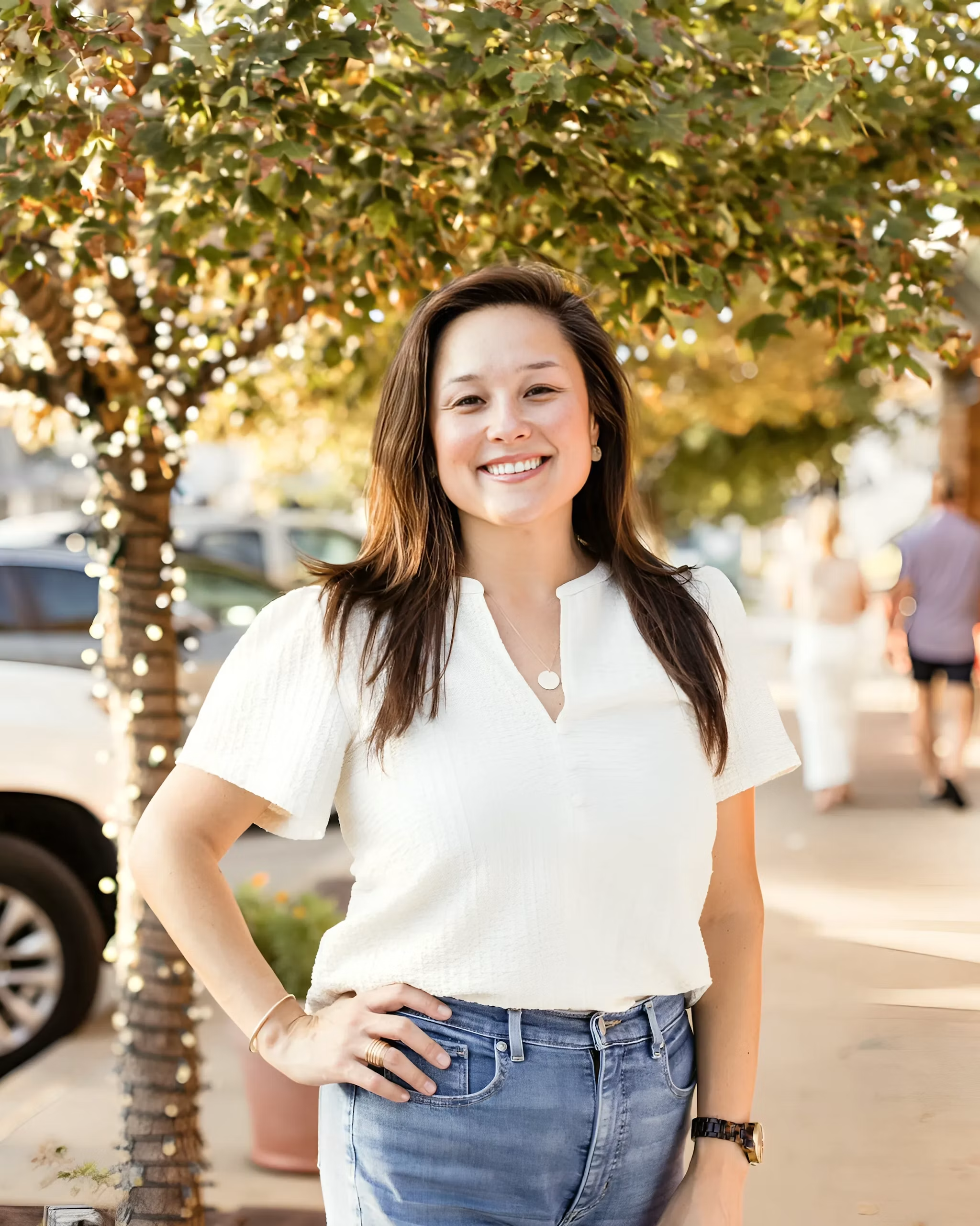
Democratic candidate for governor Cyndi Munson met with Shawnee residents last month to discuss her campaign and answer questions on issues ranging from public education and health care to mental health and economic development.
The meet-and-greet drew approximately 100 attendees to downtown Shawnee, one of several stops Munson made throughout central Oklahoma that day. During the event, Munson introduced attendees to her background and outlined what she said would be her priorities if elected governor.
“Oklahomans are ready for change,” Munson said. “It’s not about being a Democrat or Republican. It’s about putting someone in office who understands what everyday working people are going through.”
Munson represents Oklahoma House District 85 and serves as the House Democratic leader. Elected to the Oklahoma House of Representatives in 2015, she became the first Asian American woman elected to the Oklahoma Legislature.
Originally from Lawton, Munson is the daughter of a Vietnam War veteran and a South Korean immigrant. Her father raised Munson and her younger sister while working multiple jobs and serving in the U.S. Army.
“My dad’s service to this country, to his family, have shaped my perspective on public service, how we take care of our neighbors and our family,” Munson said.
Munson became the first person in her family to attend college through Oklahoma’s Promise, later graduating from the University of Central Oklahoma.
“I’m the first in my family to go to college, thanks to Oklahoma’s Promise,” Munson said. “And those early investments, of course, transformed my life and helped me to be where I am today.”
Before entering politics, Munson worked in the nonprofit sector, including with the Girl Scouts of Western Oklahoma, providing leadership programs for girls in low-income schools, juvenile detention centers and public housing.
Education was among the primary issues discussed during the event.
“My plan is to invest in our public schools. We need to stop sending public dollars to private schools,” Munson said.
“We’ve got to pay our teachers more. We’ve got to increase pay for support staff. We need nurses and counselors. We’ve got to address special education in Oklahoma,” Munson said.
“We should provide a nutritious breakfast and lunch,” she said. “It will address our affordability crisis with working families, take that stress off of our working parents, and also have a child who is prepared to learn.”
Health care was another major topic throughout the event.
“We must fight for every federal dollar that we send to Washington, D.C., back to Oklahoma, protect our hospitals, and make sure Oklahomans stay insured,” Munson said.
“It’s not just hospitals,” she said. “It’s long-term care facilities that provide services for Oklahomans with disabilities. Our tribes use those Medicaid dollars.”
During the question-and-answer portion, attendees raised concerns about senior care, mental health services, OETA funding and other issues.
“OETA, day one,” Munson said. “Day one, I can work with the Legislature to sign legislation. We can fast-track it through to extend the sunset for OETA and make sure OETA gets the money that they need.”
Another attendee discussed recent youth suicides and access to mental health care in rural Oklahoma.
“The more I travel, especially in rural Oklahoma, the lack of services, especially mental health care, is just unacceptable,” Munson said. “I hear over and over again, if you’re not at a place where you’re going to hurt yourself or hurt someone else, you don’t get access to care.”
“It’s not just having services, but transportation, the stigma that you have to overcome, and what resources clearly are not available at school,” she said.
Economic development and the role of large corporations also emerged during the discussion.
“Should I be elected governor, on day one, I would sign an executive order putting a pause or moratorium on any new data center project,” Munson said.
“We need tighter regulations,” Munson said. “We need to let these big tech companies know that when you come to Oklahoma, you’re not going to use up all our water. You’re not going to break up our utility costs. You’re not going to take our tax dollars and then … leave us behind.”
An Oklahoma Baptist University student asked why young adults should pay attention to state and local politics rather than focusing primarily on federal elections.
“The decisions that we make at a local level become law very quickly, and so there’s more of a direct impact at the local level even more so than at the federal level,” Munson said.
“If you care about … affording rent, affording food, transportation, all of those things are impacted by the decisions we make at the Capitol in Oklahoma.”
Munson closed by encouraging attendees to participate in the political process.
“If you’re sending me to the governor’s mansion, send more Democrats to the State House and the State Senate because we need balance,” Munson said.
“Your vote only doesn’t count when you don’t vote,” she said.
